
RF Energy for Remote Environmental Monitoring: Sustainable, Contactless Power
Author
Admin
Date
2025-08-22 13:00
Views
508
From smart agriculture to climate science, environmental monitoring is becoming a cornerstone of sustainability. Thousands of sensors are deployed worldwide to measure soil health, air quality, water levels, and biodiversity. These devices provide the critical data needed to understand and protect ecosystems. Yet one recurring challenge limits their potential: power supply. Batteries eventually run out, requiring costly replacement and creating electronic waste in fragile environments.
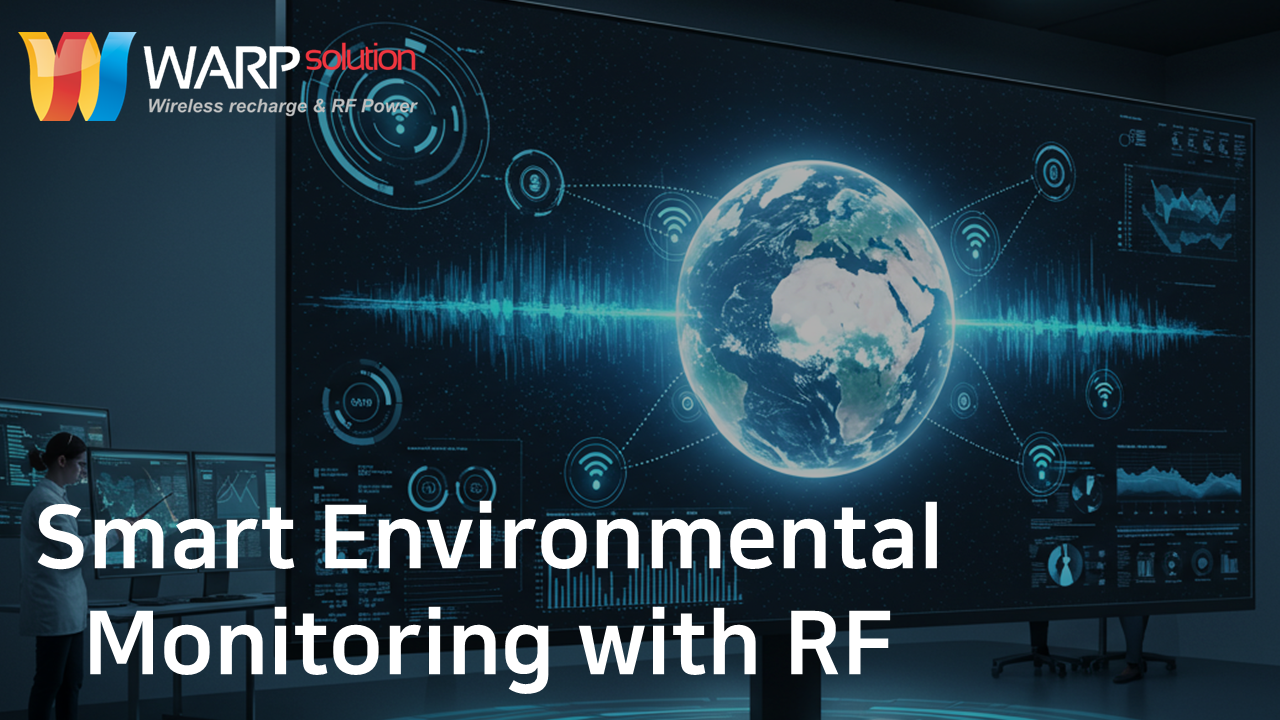
Our RF wireless energy is trying to offer a sustainable alternative. By providing contactless, continuous power for ultra-low-power monitoring devices, RF energy can extend device lifespans, reduce maintenance needs, and support greener environmental operations.
The Power Challenge in Remote Monitoring
Environmental sensors are often placed in the most inaccessible locations:
| > Forests for fire detection or biodiversity studies |
| > Rivers and wetlands for water quality monitoring |
| > Agricultural fields for soil and crop health tracking |
| > Remote reserves for camera traps or habitat sensors |
Most of these devices run on small batteries. Depending on usage, they may last only a few months to a year before needing replacement. In large-scale deployments, this adds up: managing hundreds or thousands of sensors means constant maintenance, human labor, and high costs. And in conservation projects, battery replacements can disturb wildlife—researchers may need to revisit habitats, retrieve devices, or even capture animals to service trackers. The impact is not just financial but ecological.
How RF Wireless Power Helps
RF energy provides a way to keep low-power devices running sustainably:
* Contactless charging: Devices can harvest energy without physical connection, even when sealed against dust or water.
* Extended lifetime: Smaller batteries last longer when supported by RF top-ups.
* Reduced maintenance: Fewer site visits mean lower costs and less environmental disturbance.
* Hybrid compatibility: RF can complement solar or kinetic harvesting, ensuring uptime even in low-light or unpredictable conditions.
Example Applications
◆ Forest Fire Sensors: Ultra-low-power IoT sensors detecting heat or smoke, powered indefinitely via RF signals.
◆ Water Quality Monitoring: River and wetland probes that recharge through nearby RF base stations, eliminating the need for frequent replacement.
◆ Smart Agriculture: Soil moisture and nutrient sensors are continuously powered to support precision farming.
◆ Wildlife Conservation: Camera traps and habitat sensors in protected areas could benefit from RF energy, reducing human intervention and avoiding unnecessary stress on animals.
At WARP Solution, we are developing high-efficiency RF-to-DC semiconductor chips designed for low-power, real-world applications. Our technology can serve as the backbone for sustainable monitoring systems—from smart cities to remote natural reserves. By enabling long-term, contactless power, we aim to reduce waste, extend device lifespans, and make data-driven environmental stewardship more effective.
Environmental monitoring is essential for building a sustainable future, but power supply remains its weakest link. RF wireless energy presents a way forward—minimizing maintenance, reducing waste, and supporting continuous data collection in even the most remote locations.

Copyright ©2024 WARP Solution. All Rights Reserved